Matthew Bates
Biography & Shows
This is an autobiography, and I promise to keep it to one page. I was born in a military hospital in Washington, DC, my dad, Stephen Bates was in the Marine Band a clarinet player, that is why we were there. My family is filled with artists, my sister, Jessica is a theater actress, my grandmother and great aunt were both painters, and my mother, Isabella teaches meditation. Growing up in Washington was a great way to be introduced to the art world, as a child my parents would take me to all of the great art museums, the National, the Corcoran, and especially the Phillips Collection where my father was good friends with the curator. I started painting when I was little, I found some watercolors that I made when I was ten, but it wasn't until I went to high school that I started to really get into it. My teacher at Sidwell Friends High School was Percy Martin. He was great, mostly he just let his students play with the materials, we tried printmaking and drawing, and also painting, mostly watercolors and acrylics. The best part was that he would let us just be there during our free time, that made it possible to work on our projects without hassle. I explored the mediums, and Percy would let us be, to find our own style. This was a fundamental part of my artistic life.
I moved out West to San Francisco for college, I got into USF and decided to become an Advertising Major, a big mistake, but ironically, it placed me in the art department, which at USF was actually the Academy of Art College in downtown San Francisco. I was really in my element there. I loved taking art classes (I dropped the Advertising major fast) the teachers honed all of my skills, especially in the drawing and design departments. As a sophomore I took a course from world class sculptor Thomas Marsh in Anatomy for Artists. One day he sat us down in a semi-circle and told us that if we considered ourselves artists, then we should not buy a stereo, but a airplane ticket to Florence, Italy to see its artistic wonders. This sounded absurd, we were in California, and he was giving us directions to the David museum from the train station in Firenze!
I guess that you have figured out by now that I went to Firenze (Thanks Maestro). I went to Gonzaga University's Florence program, which is not an art program. At the time I was aware that I was doing too much and I needed a break from the whole art scene at the Academy. Art schools are way too competitive, and I was in over my head, working a full time job at the Esprit Outlet Store, and going to school full time. So I went off to Firenze, and nothing was ever the same after that. I lived in a Pensione, Hotel Fiorentina in an ancient building in the Historic Center. There I met Manola, who swept me off of my feet and we have been together ever since. We moved back to San Francisco for a year, I was going to graduate, but things moved fast and life took me in its wind swept hands and tossed me back to Firenze before I finished school, which was a great choice. At 22 years old, I had to learn a new language, culture, and get a job, all at once. I forgot to think about what was the meaning of life, and why I was here, I was too busy trying to fit in to Italian culture. This was a good thing because I was just happy enough to survive!My outlet was painting, which began to change, with Firenze's ever present influence. The city would talk to me, whispering its secrets. I began to take photos of the city, looking for inspiration. The photos where small and hard to work with, I dreamed of a better time, a time where digital imagery would be available. I had to wait until the end of the 90's until I was able to get my first computer, and then my first digital camera. I began to take thousands of photos, all in search of the perfect composition. The technology got better, the images became clearer, and the paintings began to really tell my story. My Cityscapes tell the story of my days in Firenze. Each painting is an Odyssey taking up to a year to finish.
Every artist has his stories, mine are told through my paintings, each character, as if they were in a novel, with my own personal impression. I take photos of people in the city, without their knowledge. I want to capture a real moment, two lovers on a bench, people seeing Firenze for the first time, bored people in line, people on their cell phones, texting while they cross the street, all people from our time. In ten years these paintings will remind us who we were, and in a hundred years they will tell our story.
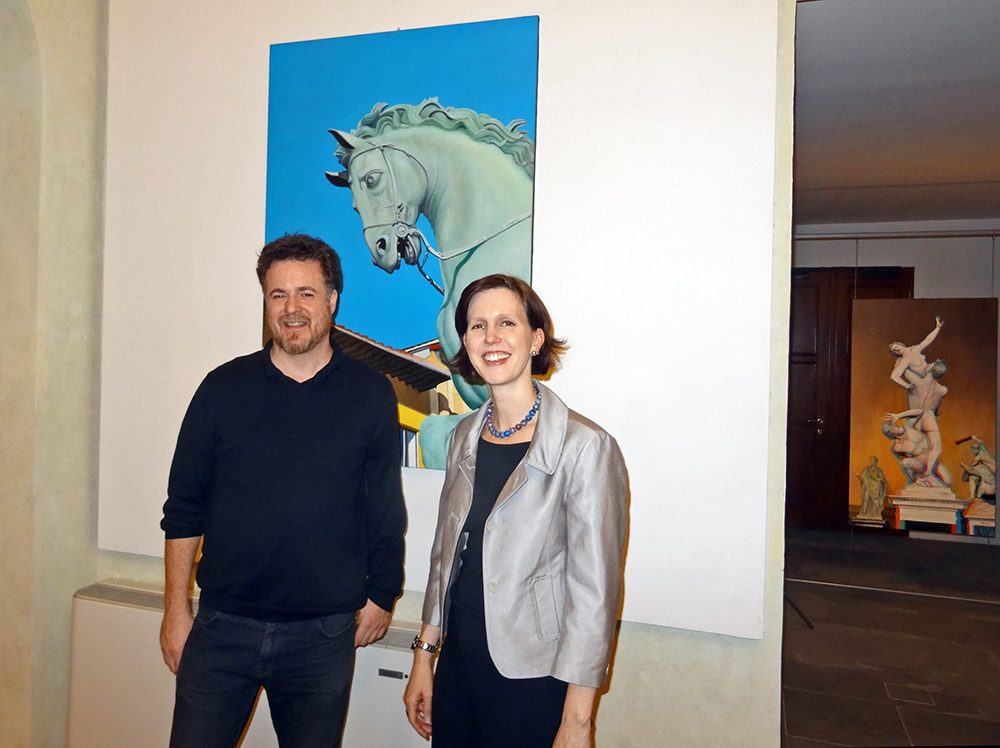
Matthew Holden Bates with Mrs. Abby Rupp, U.S. CONSUL GENERAL in Florence
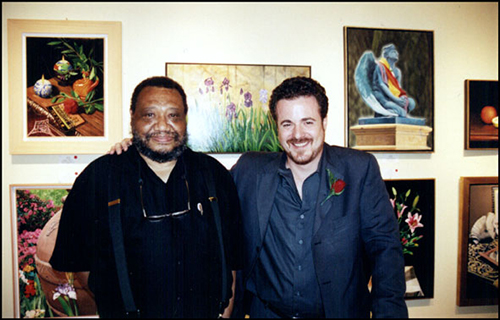
Percy Martin and Matthew Holden Bates
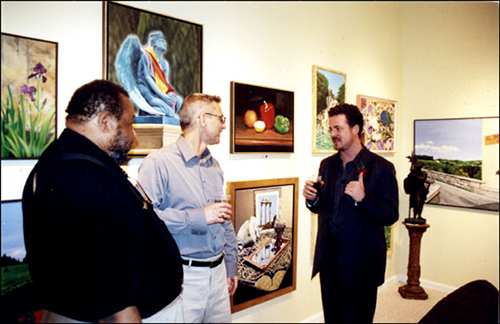
Percy Martin, John Elko and MHB
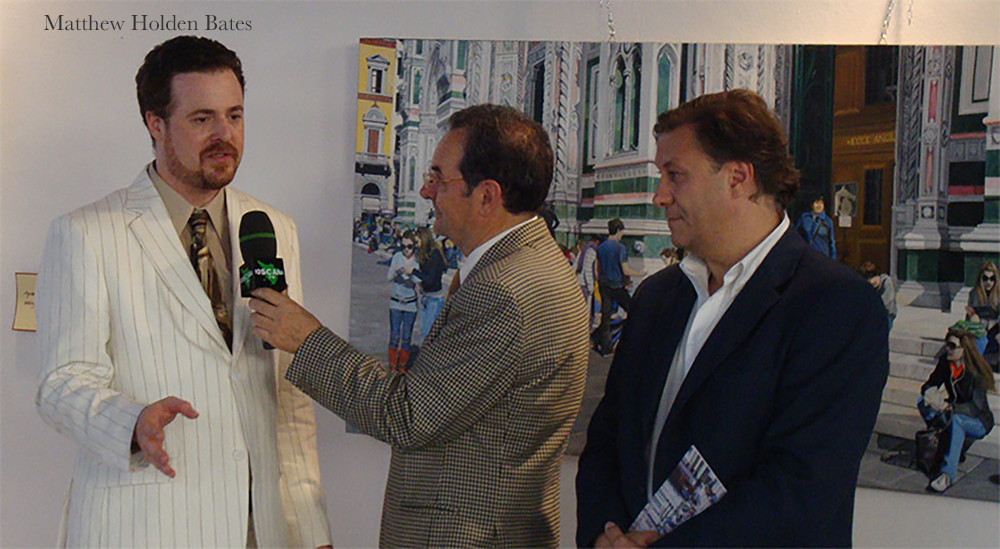
Matthew Holden Bates interviewed by Fabrizio Borghini and Massimo Rollino
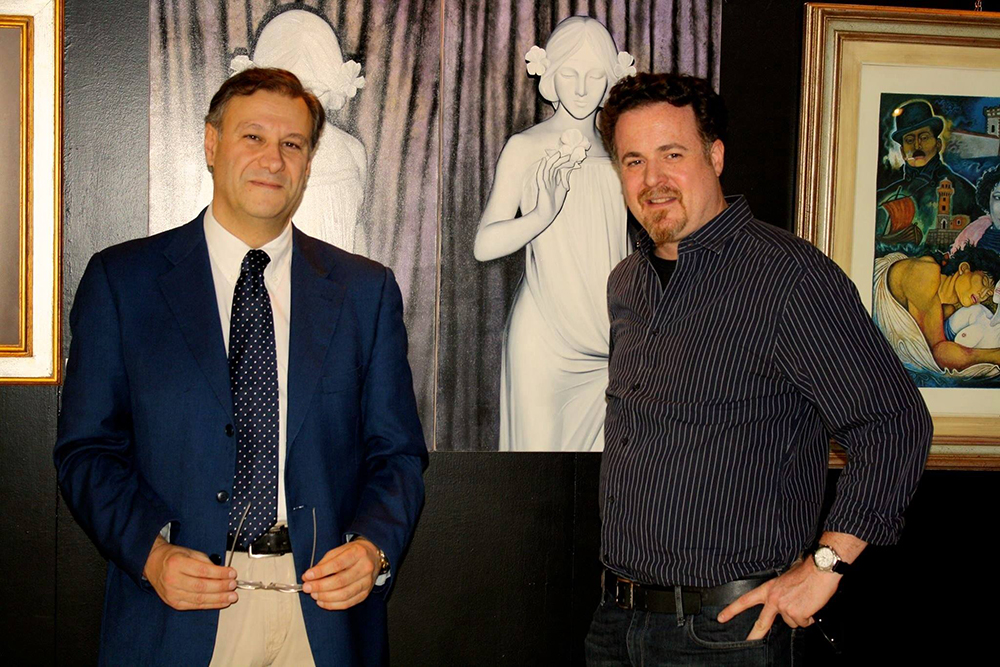
Massimo Rollino and Matthew Holden Bates
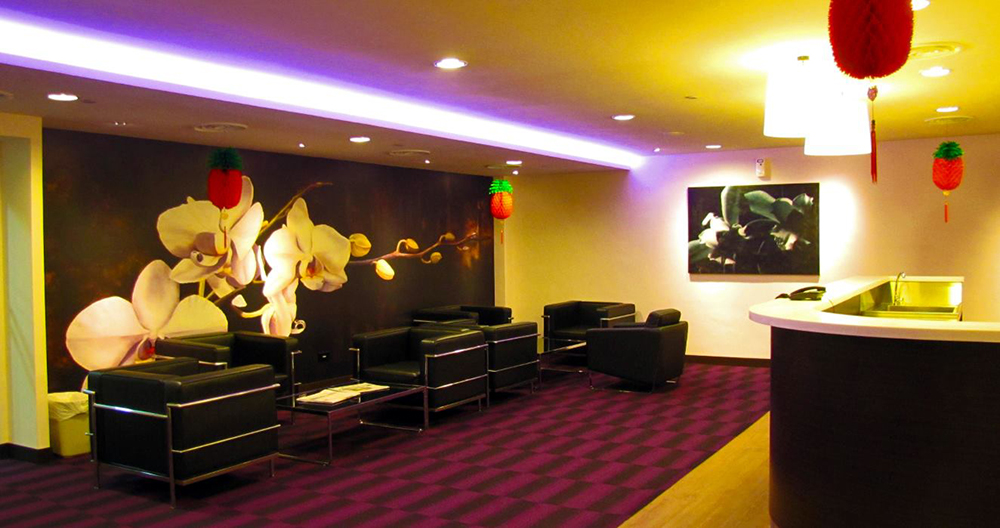
"Orchids" by Matthew Holden Bates - made into a wall mural in Singapore
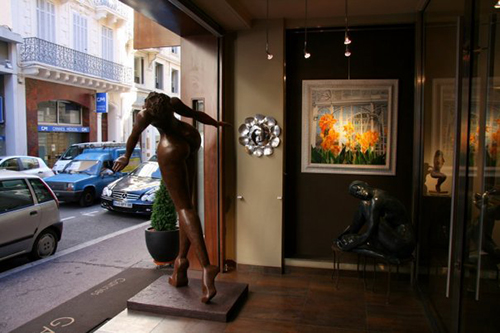
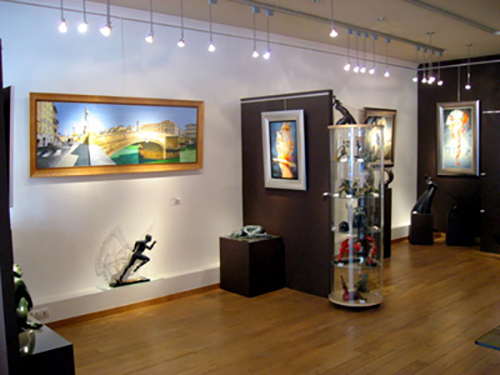
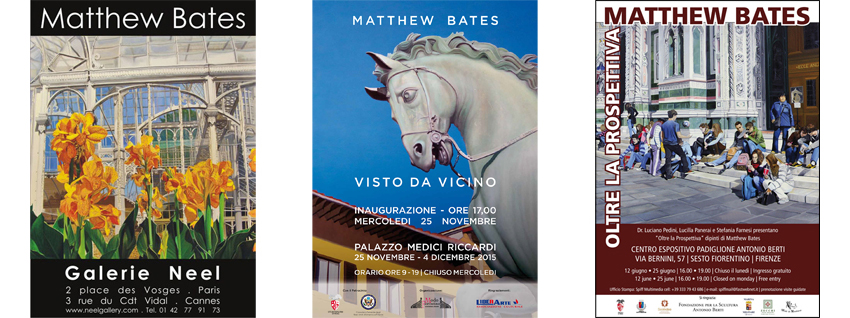
Matthew Holden Bates at Galerie Neel in Cannes
Selected Exhibitions:
1997 Artisans Gallery, Washington D.C. USA
1998 Watergate Gallery, Washington D.C. USA
1998-2000 Mannaioni Gallery, Firenze, Italy
1998 Piansa Gallery, One Man Show - Firenze, Italy
1998 Kennedy Center, Washington D.C. USA
2001 Ken’s Gallery, Firenze, Italy
2001 Florence Art Gallery, Firenze, Italy
2001 Art-E-Mail, Marbella, Spain
2001 American Consulate, Firenze, Italy (Group Show)
2002 Agora Gallery, New York City
2002 Art-E-Mail, Marbella, Spain
2003 Enoteca Giraldi, One Man Show - Firenze, Italy
2004 Figaro Gallery, Annandale, Virginia USA
2005 Figaro Gallery, Annandale, Virginia USA
2006 Flowers That Last Forever - May 13 - June 11, 2006 - Figaro Gallery, Annandale, Virginia USA
2006 "Art in Progress" November 5, 2006 - SKY TV (Italy) Leonardo Channel Watch Video
2008 NEEL Gallery, Paris, France
January 24 to February 16, 2009 - NEEL Gallery, Paris France
2009 Galerie Neel, Cannes, France
2010 Galerie Neel, Cannes, France
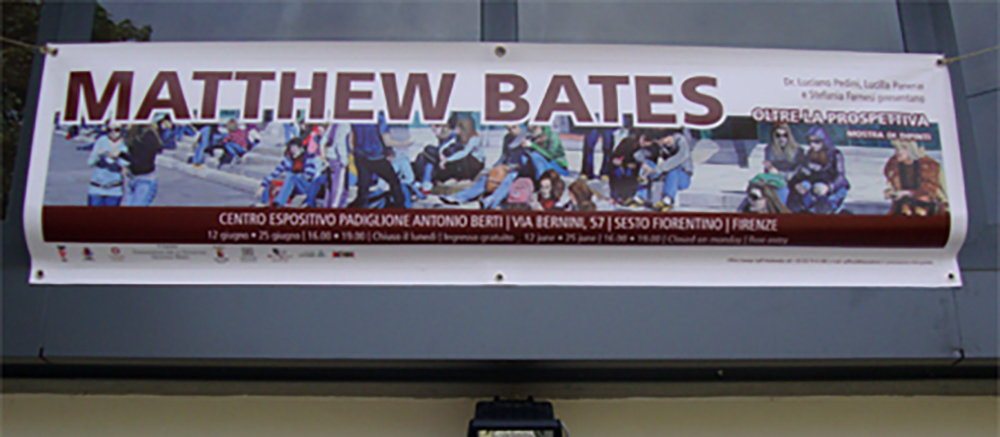
June 11 - 25, 2010 "Oltre La Prospettiva"("Beyond the Perspective")- (One Man Show) at Padaglione Berti - Sesto Fiorentino (Firenze, Italy) (Watch the Video)
October 2 -17, 2010 "Le Scatole nel Mondo - Il Mondo in una Scatola" in Palazzo Pretorio, Sesto Fiorentino, Firenze, Italy (Collective Show)
December 12-19, 2010 "Giuseppe Pescetti" - in Palazzo Pretorio, Sesto Fiorentino, Firenze, Italy (Collective Show)
December 15, 2010 "Le Scatole nel Mondo - Il Mondo in una Scatola" Theme: Reflections on Water in Palazzo Pretorio, Sesto Fiorentino, Firenze, Italy (Collective Show)
April 9, 2011 "Know Breast Cancer -March Madness " to benefit National Breast Cancer Prevention Project/Know Breast Cancer, Manchester, MA USA (Collective Show)
2011 Galerie D'Orsay, Boston, MA USA
December 3-17, 2011 "In Viola" LiberArte at Villa San Lorenzo, Sesto Fiorentino, Firenze, Italy (Collective Show)
2012 Galerie D'Orsay, Boston, MA USA
June, 2012 "Tema Libera" LiberArte at Villa San Lorenzo, Sesto Fiorentino, Firenze, Italy (Collective Show)
2013 Galerie D'Orsay, Boston, MA USA
August 2013 - "Fra Spazio e Tempo" - One Man Show at Gallery San Firenze - Piazza San Firenze - Firenze, Italy
2014 - Galleria di Hotel Nazionale - One man exhibition (Continuing show) - Firenze, Italy
February 2014 - CONFRONTI: ASTRATTISMO- REALISMO VI edizione, Merlino. Bottega d'Arte - Firenze, Italy
April 2014 - ArtExpertise - Group Show - Firenze, Italy
April 2014 - Liberarte, 10th year group exhibition, Sesto Fiorentino, Firenze, Italy
2015 - Galleria di Hotel Nazionale - One man exhibition (Continuing show) - Firenze, Italy
December 2014 - La Fondazione Claudio Ciai - New Florence Event - Group Show - Firenze, Italy
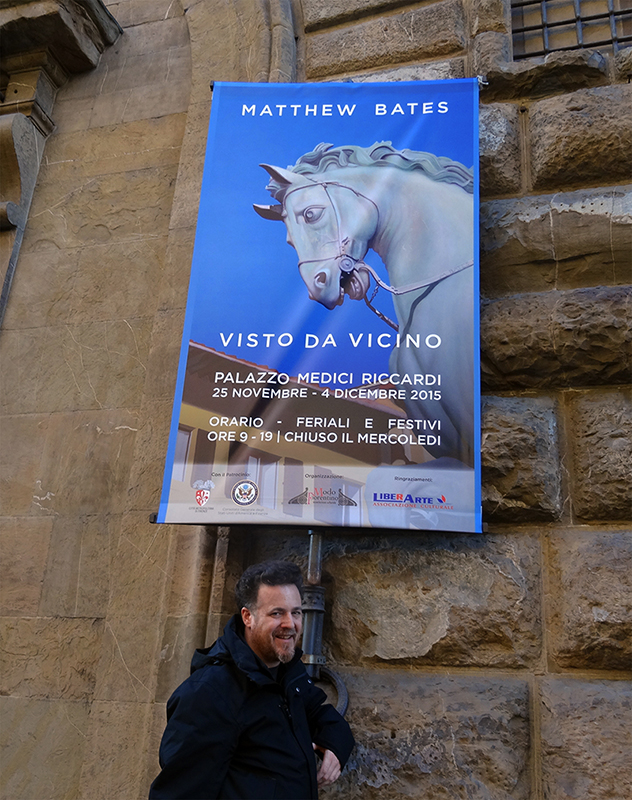
November 25, 2015 - December 4, 2015 - "Visto da Vicino" - Palazzo Medici Riccardi, Firenze, Italy
2016 - Galleria di Hotel Nazionale - One man exhibition (Continuing show) - Firenze, Italy
June 2017 - October 2017 - "Tuscan Taste" - One Man Show, Firenze, Italy
2017 - Galleria di Hotel Nazionale - One man exhibition (Continuing show) - Firenze, Italy
2018 - Sala San Sebatiano - Group Show . Sesto Fiorentino
2019 - Home Visit - One Man Show - Manchester by the Sea September 6th
2019 - Sala San Sebastiano - Group Show . Sesto Fiorentino - September 21 - October 5
2023 -"Arte si Mostra" - Group Show - February 6 - Roma
cityscapes / landscapes / flowers / statues / still life / more
Email - www.mattbates.net
Matthew Holden Bates
Telephone: +39 055 483827 | Cell. +39 3337996509
©2000 - 2023, Matthew Bates, Firenze Italy - All Rights Reserved